
When we talk about sovereignty, we’re not invoking an abstract theory or a dusty legal term. We’re talking about something lived, inherited, and continuously upheld—especially here in Canada.
Sovereignty is the quiet condition that allows a people to decide for themselves how they live together. It is the space in which democracy breathes, culture endures, and responsibility is shared.
A Clear Definition, Grounded in Practice
At its most basic level, sovereignty means supreme authority. Merriam-Webster defines it as “supreme power especially over a body politic” and “freedom from external control.”
Wikipedia expands this into a civic and international context: sovereignty is the full right and power of a governing body over itself, without interference from outside sources.
These definitions matter because they strip away the noise. Sovereignty is not aggression. It is not isolation. It is not dominance.
It is self-determination.
Sovereignty in the Canadian Story
Canada’s sovereignty has never been a single moment. It has been a process—gradual, negotiated, and often imperfect.
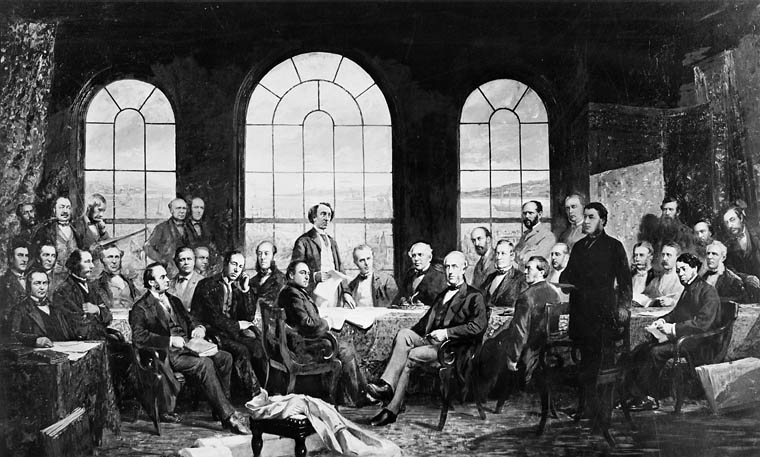
- Confederation in 1867 gave Canada internal self-government.
- The Statute of Westminster in 1931 recognized Canada’s legislative independence.
- The Constitution Act of 1982 patriated our constitution, ending reliance on the British Parliament.
Each step wasn’t about severing ties for the sake of it. It was about assuming responsibility—for our laws, our rights, and our future.
That pattern matters. Canadian sovereignty has grown through institution-building, not revolution. Through continuity, not collapse.
Sovereignty Is Not a Wall
One of the most persistent myths is that sovereignty means shutting the world out.
In reality, sovereignty is what allows meaningful cooperation. Only a self-governing country can enter alliances, treaties, and partnerships by choice rather than necessity.
For Canada, this has meant:
- Participating in global institutions
- Maintaining strong alliances
- Trading openly while protecting domestic interests
Sovereignty doesn’t say “we stand alone.”
It says “we stand as ourselves.”
Why Sovereignty Matters Now
In the modern era, sovereignty is tested less by invading armies and more by dependencies:
- Digital infrastructure owned elsewhere
- Communications systems subject to foreign pressure
- Supply chains that can be disrupted or leveraged
- Information flows shaped by interests beyond our borders
None of this requires panic. But it does require clarity.
If Canadians cannot reliably communicate, decide, or act without external veto, then sovereignty becomes theoretical rather than real.
Sovereignty as a Shared Obligation
Sovereignty is not something the government “has” on behalf of passive citizens. It is something a society maintains together.
It lives in:
- Independent institutions
- Trusted public infrastructure
- An informed population
- A culture of civic responsibility
It weakens when we outsource essential capacities without reflection.
It strengthens when we invest in systems that endure beyond any single leader, company, or moment.
Looking Forward
Canada’s future sovereignty will not be defended by slogans or symbols alone. It will be upheld by choices about infrastructure, governance, and long-term capacity.
Sovereignty is not about nostalgia.
It is about continuity.
Standing together, unyielding, we hold the line. Not against the world, but for our ability to meet it on our own terms.