
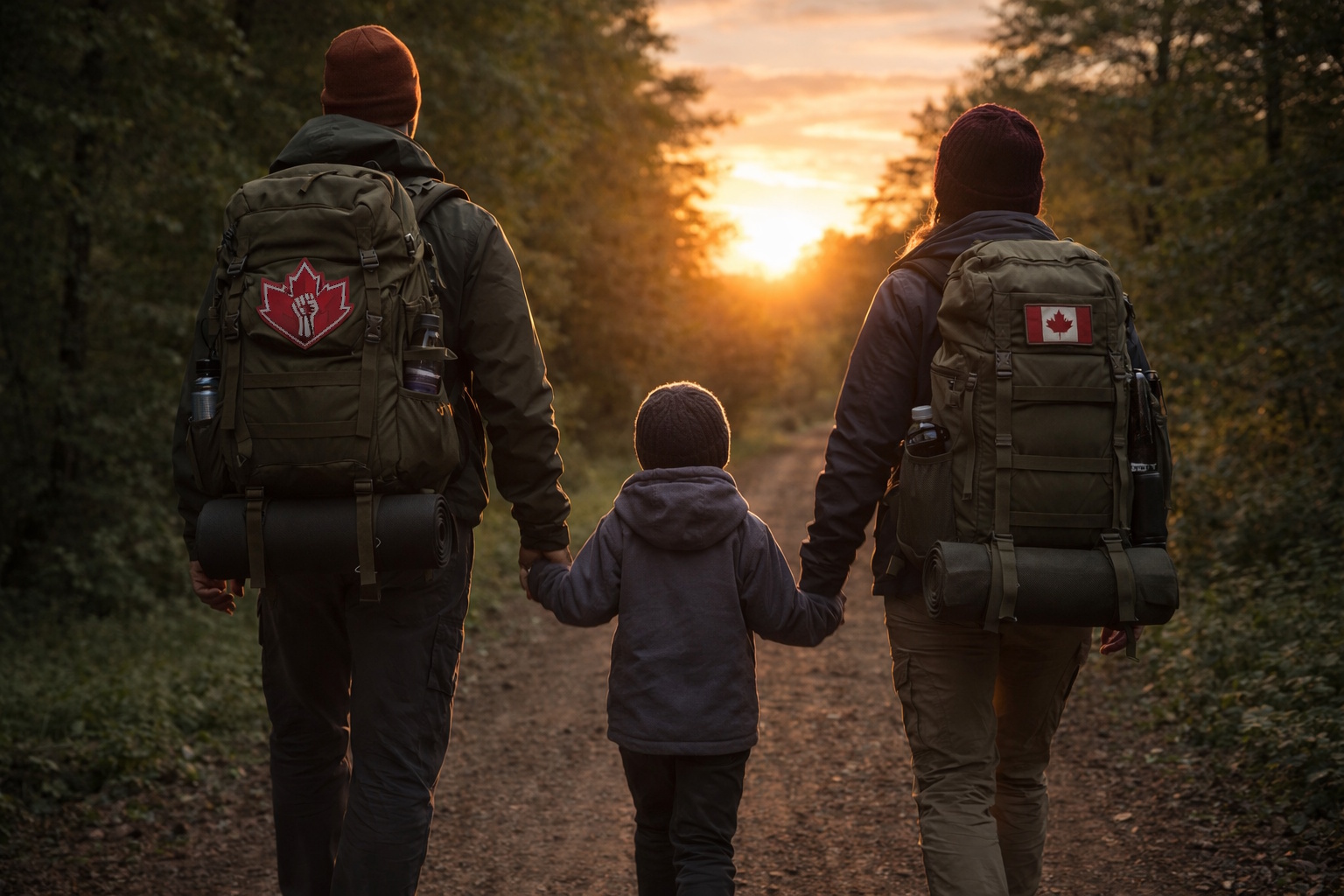
How to Pack your Go Bag
- Total weight limit – Aim for 10–12 kg (22–26 lb) maximum.
The bulk of your pack will be your “normal” gear; the go‑bag is a lightweight emergency backup. - Layered distribution – Place heavy items at the back (e.g., sleeping pad, stove) and lighter items on top (e.g., emergency blanket, first‑aid kit).
- Accessibility – The most vital items (firestarter, signal mirror, water, map/compass) should be in the outermost compartment or a quick‑access pouch.
- Durability & Protection – All items should be stored in waterproof or windproof bags.
Use zip‑lock or dry‑sack organization for electronics and sensitive items. - Practice – Set up the bag on your training days, run through a simulated emergency, and adjust based on real‑world feedback.
Your Essential Go Bag Checklist
This checklist is interactive!
Click each item to see why it’s essential and its ideal qualities.
Your selections are saved to a cookie in your browser so when you return (if you haven’t cleared cookies) your selections will remain. This way your data is only on your device, and not saved to this server.
Clothing & Personal Protection
-
Base layer (thermal underwear)
Why it’s essential: Keeps you dry and warm when sweating; wicks moisture.
Ideal qualities: Breathable, quick‑dry, thin, lightweight, high‑mercury or synthetic material.
-
Mid‑layer (fleece or down)
Why it’s essential: Provides insulation between base and shell.
Ideal qualities: Soft, insulating, wind‑proof, compressible, minimal bulk.
-
Shell (rain‑proof / wind‑proof coat)
Why it’s essential: Protects from precipitation, wind, and temperature extremes.
Ideal qualities: Breathable membrane, waterproof, wind‑proof, durable, easy to pack.
-
Hat
Why it’s essential: Retains body heat and protects head from wind.
Ideal qualities: Warm, lightweight, fits snugly, breathable if possible.
-
Gloves
Why it’s essential: Maintains dexterity and warmth for hands.
Ideal qualities: Insulating, waterproof or wind‑proof, breathable, durable.
-
Boots
Why it’s essential: Provides traction, warmth, and protection for feet.
Ideal qualities: Waterproof, breathable, sturdy sole, supportive arch, durable lacing.
-
Socks
Why it’s essential: Prevents blisters and keeps feet dry.
Ideal qualities: Moisture‑wicking, cushioned, compressible, easy to dry.
-
Bandana / face mask
Why it’s essential: Protects face from wind, sun glare, and cold.
Ideal qualities: Soft, breathable, multi‑use, easy to tie, lightweight.
-
Sun protection (sunscreen & lip balm)
Why it’s essential: Prevents sunburn and UV damage, especially at high altitude.
Ideal qualities: SPF 30+ or higher, broad‑spectrum, water‑resistant, lip balm with SPF.
Shelter & Protection
-
Bivy / tarp (lightweight shelter)
Why it’s essential: Provides quick, compact cover from wind, rain, and cold.
Ideal qualities: Durable nylon or polyester, waterproof, wind‑proof, easy to set up.
-
Space blanket / reflective blanket
Why it’s essential: Reflects body heat and keeps you warm in a shelter.
Ideal qualities: Lightweight, compact, highly reflective, easy to pack.
-
Sleeping bag liner
Why it’s essential: Adds an extra layer of insulation inside the sleeping bag.
Ideal qualities: Lightweight, insulated, compressible, breathable.
-
Sleeping pad
Why it’s essential: Provides insulation from the cold ground.
Ideal qualities: Lightweight, compact, compressible, self‑inflating or foam.
-
Windbreak
Why it’s essential: Reduces wind chill when building a shelter or signalling.
Ideal qualities: Light, foldable, waterproof, durable.
Water & Hydration
-
Water filter (e.g., Pitch‑Perfect)
Why it’s essential: Removes bacteria and protozoa, allowing safe drinking from natural sources.
Ideal qualities: Lightweight, easy to use, high‑flow rate, long‑lasting cartridge.
-
Water purification tablets
Why it’s essential: Quick chemical treatment of water when filter is unavailable.
Ideal qualities: Low odor, long shelf life, minimal taste, small size.
-
2 L water bottle
Why it’s essential: Immediate source of clean water for short periods.
Ideal qualities: Durable, leak‑proof, easy to clean, lightweight.
-
Hydration bladder (e.g., CamelBak)
Why it’s essential: Provides hands‑free water during hikes or rescues.
Ideal qualities: Leak‑proof, 2 L capacity, quick‑draw hose, compact.
-
Portable water‑collection system (collapsible bowl, funnel, or tarp)
Why it’s essential: Allows you to gather and store water from streams or lakes.
Ideal qualities: Foldable, durable, lightweight, versatile.
Food & Cooking
-
Dry food (e.g., MREs, freeze‑dried meals)
Why it’s essential: Compact, calorie‑dense food when cooking is not feasible.
Ideal qualities: High calories, low weight, easy to rehydrate, long shelf life.
-
Portable stove (e.g., MSR PocketRocket)
Why it’s essential: Allows you to heat food and water when safe.
Ideal qualities: Lightweight, quick‑ignition, efficient, compatible with gas canisters.
-
Gas canister (fuel for stove)
Why it’s essential: Provides reliable fuel for stove or lantern.
Ideal qualities: Lightweight, 250 ml or smaller, safety valve, compatible with stove.
-
Knife / multitool
Why it’s essential: Useful for food prep, shelter assembly, and emergency cuts.
Ideal qualities: Sturdy blade, locking mechanism, multiple tools, lightweight.
Navigation & Communications
-
Topographic map
Why it’s essential: Provides situational awareness and aids in navigation.
Ideal qualities: Waterproof, foldable, detailed, durable paper or laminated.
-
Compass
Why it’s essential: Allows you to orient yourself regardless of GPS status.
Ideal qualities: Durable housing, magnetic needle, easy to read.
-
Satellite phone (e.g., Garmin Satellite Phone)
Why it’s essential: Enables emergency communication where cell coverage is absent.
Ideal qualities: Lightweight, long battery life, reliable signal, robust casing.
-
Head‑lamp / head‑mounted light
Why it’s essential: Provides illumination for night operations or in low light.
Ideal qualities: Bright LED, long battery life, adjustable beam, lightweight.
-
Rope / paracord (1 m segment)
Why it’s essential: Used for tie‑downs, securing shelters, or rescue harnesses.
Ideal qualities: Durable, strong (≥ 500 lb), low‑drag, lightweight.
First‑Aid & Safety
-
Compact first‑aid kit
Why it’s essential: Treats blisters, cuts, and other injuries.
Ideal qualities: Small, comprehensive, durable, waterproof bag.
-
Wound dressing (e.g., Steri‑Strip)
Why it’s essential: Secures bandages and protects wounds.
Ideal qualities: Sterile, small, lightweight, easy to apply.
-
Bandage or gauze
Why it’s essential: Controls bleeding and protects injuries.
Ideal qualities: Bleeding‑control, easy to use, compact, lightweight.
Tools & Equipment
-
Multi‑tool or knife
Why it’s essential: Useful for food prep, shelter assembly, and emergency tasks.
Ideal qualities: Durable blade, multiple tools (pliers, screwdriver), lock‑back, compact.
-
Tarp or canvas for shelter
Why it’s essential: Provides additional cover when bivy is insufficient.
Ideal qualities: Waterproof, wind‑proof, lightweight, easy to carry.
-
Survival hammer (e.g., O’Neill)
Why it’s essential: Breaks ice, repairs gear, and serves as a tool.
Ideal qualities: Lightweight, balanced, durable, easy to carry.
-
Fixed‑blade knife (optional)
Why it’s essential: Durable cutting tool for tough tasks.
Ideal qualities: Full‑tang, high‑grade steel, handle grip, lightweight.
Signaling & Communication
-
Signal flag
Why it’s essential: Visually signals to rescuers over distances.
Ideal qualities: Reflective, brightly colored, lightweight, durable.
-
Strobe light or flare
Why it’s essential: Emits a highly visible signal for rescue.
Ideal qualities: Bright, long range, compact, easy to deploy.
Documentation & Notes
-
Document your plan and checklists
Why it’s essential: Keeps you organized and ensures you don’t forget essential items.
Ideal qualities: Waterproof, durable paper or digital backup, clear formatting.
Conclusion
- Always remember to keep your gear light, organized, and easy to access.
- Check each item’s condition and replace as needed to avoid failures during emergencies.
- Regularly practice the use of all items to ensure they function effectively when needed.
- Update your gear as technology and your personal needs evolve.